=-


          CONTENT


 Annual Report  2000


 Annual Report  2003


 Tomlinson’s Book


 The MI6 List 


 The Truth Behind the MI6 Facade


 The Mitrokhin Report


 Mike Smith Blog


 Mike Smith File


MI5-MI6


MAIN PAGE


 LINKS


=

      JAR2.COM     


07-16-06

Russian (Spy?) or Innocent

"Example"

02-13-06

I recently received information regarding the case below and am requesting any parties with information related to the case to contact me. Thank you in advance, anonymity guaranteed.

SEE:  Mike Smith Espionage Case 


Spy indictment: Official Secrets Act

It may not be known to the readers of my blog what was actually involved in my case and trial, and exactly what I had been accused of doing that led to my conviction for espionage. The Indictment was worded as follows:

The Crown Court at Central Criminal Court
The Queen -v- Michael John Smith

Michael John Smith is charged as follows:

COUNT 1
Statement of Offence
Communicating material to another for a purpose prejudicial to the safety or interests of the State, contrary to Section 1(1)(c) of the Official Secrets Act 1911.

Particulars of Offence
Michael John Smith on a day between the 1st day of January 1990 and the 1st day of January 1991, for a purpose prejudicial to the safety or interests of the State, communicated to another a sketch, plan, model, article, or note, or other document or information which was calculated to be or might have been or was intended to be directly or indirectly useful to an enemy.

COUNT 2
Statement of Offence
Communicating material to another for a purpose prejudicial to the safety or interests of the State, contrary to Section 1(1)(c) of the Official Secrets Act 1911.

Particulars of Offence
Michael John Smith on a day between the 1st day of January 1991 and the 1st day of May 1992, for a purpose prejudicial to the safety or interests of the State, communicated to another a sketch, plan, model, article, or note, or other document or information which was calculated to be or might have been or was intended to be directly or indirectly useful to an enemy.

COUNT 3
Statement of Offence
Making a sketch or note for a purpose prejudicial to the safety or interests of the State, contrary to Section 1(1)(b) of the Official Secrets Act 1911.

Particulars of Offence
Michael John Smith between the 30th day of April 1992 and the 8th day of August 1992, for a purpose prejudicial to the safety or interests of the State made sketches or notes which were calculated to be or might be or were intended to be directly or indirectly useful to an enemy.

COUNT 4
Statement of Offence
Obtaining or collecting material for a purpose prejudicial to the safety or interests of the State, contrary to Section 1(1)(c) of the Official Secrets Act 1911.

Particulars of Offence
Michael John Smith between the 30th day of April 1992 and the 8th day of August 1992, for a purpose prejudicial to the safety or interests of the State obtained or collected sketches, plans, models, articles, or notes, or other documents or information which were calculated to be or might have been or were intended to be directly or indirectly useful to an enemy.

There was no evidence at all about what scientific material was involved in Counts 1 and 2. I volunteered information that it related only to obsolete and unclassified commercial documentation, concerning silicon-on-sapphire and gallium arsenide technology. HRC (Hirst Research Centre) abandoned these technologies at Wembley in the late 1980s, and it would not be useful to an enemy. However, the Prosecution claimed, without any evidence, that the material must have been militarily sensitive - it is difficult to see how they arrived at such a conclusion.

Count 3 related to my handwritten notes:
JS/16 Rugate Filter Project (pp. 176-178)
JS/17 Micro-Machining Project (pp. 179-181)
JS/18 Quasi-Optical Car Radar Project (pp. 182-185)
JS/19 Micron-Valve Project (p. 186)
JS/20 Olfactory Research Project (p. 187)

I could go into great detail about the type of material found in Count 3, and the long prosecution and defence arguments about whether the “Russians” would have found it useful or not, or whether it was prejudicial to the UK. In the end these projects were potentially capable of dual commercial or military use (as is almost anything if you think about it), but there was insufficient evidence that I had either intended to hand this information to a Russian, or it was of real technical value to an enemy. After deliberation the jury used their common sense, and they rejected the prosecution claims.

Although all the scientific exhibits were in the same bag in the boot of my car, I was found not guilty of Count 3, but guilty of Count 4.

Count 4 related to GEC components and printed documents:
JS/14 Old surface acoustic wave, silicon-on-sapphire and gallium arsenide components (p. 1)

JS/15 Surface acoustic wave documents (pp. 2-175), including a RESTRICTED “ALARM” document (pp. 51-59)

JS/21-38 Bulk acoustic wave documents (pp. 188-269J), including an UNCLASSIFIED Rapier document (pp. 190-196)

SR/4 Infra-Red Imager documents (pp. 269/1-269/9)

SR/4 Silicon-on-sapphire documents (pp. 269/10-269/69)

SR/4 Gallium arsenide documents (pp. 269/70-269/87)

The components of JS/14 were old and obsolete examples (some labeled as non-working rejects) that had been lying around in my office. Since they would probably have been thrown away in any case, when the company moved site a few months later, I took them as souvenirs of my time at the company. The prosecution made the case that these components would have been useful to the Russians (for reverse engineering). However, as my expert Dr Eamonn Maher quite correctly pointed out, far more advanced and current examples of these devices were on open sale commercially - so why would a Russian be interested in obsolete material?

The documents in JS/15 was a collection of information from an approval exercise to qualify Hirst Research Centre to commercially produce similar surface acoustic wave devices, and to earn the company a certificate to meet a British Standard for this manufacturing capability (BS9450 Capability Approval Exercises in 1984). There was nothing apparently of significant military interest in this collection of documents, or so the defence was led to believe by the lack of any evidence from the prosecution, until the moment Dr Meirion Francis Lewis stepped into the witness box on 7 October 1993 and delivered his radically different view using undisclosed evidence. The issue revolved around whether one 9 page document related to the ALARM missile project. Readers of this blog will be aware that more than 12 years later the Ministry of Defence has yet to officially confirm the document was used on ALARM (Mr Andrew Mackinlay, my MP, asked a question in the House of Commons recently, but failed to get an answer). As I have stated previously, the conclusions of the Security Commission’s report were that 'at the time the document was created it was not specifically linked to a particular weapons system’ (HMSO Cm 2930, Annex A.5, July 1995). Apart from the link to ALARM there were many errors and inconsistencies in Dr Lewis’s testimony about that document, and this is also awaiting resolution.

Documents in JS/21-38 related to a small bulk acoustic wave delay line, and some of that information referred to a component from a piece of test equipment used to test the Rapier system - a sort of “go/no-go” test. However, this documentation was also part of a BS9450 Capability Approval application in 1984. The documents gave details of the frequency band used by Rapier, but did not reveal the actual spot frequencies of any installation, as each Rapier system has a different operating frequency. The sensitivity of this information can be judged from the fact that it was openly published in Janes Land Based Air Defence Review, which printed how a version of Rapier, called Possum, uses the frequency band 3.1 to 3.3 GHz and that Rapier works in the ‘F-Band’ frequency range. Many other technical points were published about Rapier in this Janes book, which can be purchased or read in a public library by any Russian who cares to look for it.

The 5 page UNCLASSIFIED Rapier document, dated 11 January 1984, was a procurement specification for a BAW (bulk acoustic wave) delay line. BAW delay line technology is well known, and at the trial it was stated that the component was to become obsolete. It is interesting that delay line specifications were openly published by GEC Marconi in a “Techbrief”, a glossy hand-out for customers, which states that typical delay lines can be manufactured with a 3.1 to 3.4 GHz frequency band. Any potential customer could request this leaflet, or buy a similar component.

It is also significant that the main “expert” called to give evidence about the technical aspects of Rapier, ex-Squadron Leader Colin Bagley, was not himself particularly well-qualified to give that evidence. My own expert Dr Eamonn Maher made a comment that the prosecution expert whose qualifications least impressed him was Colin Bagley. It is a strange and inexplicable fact that, despite ALARM and Rapier being the two specific weapons referred to at my trial, there were no witnesses called who were authoritatively expert on the design and performance of those weapons. Perhaps the prosecution was afraid of asking experts who might actually know the true significance of the documents used as exhibits at my trial?

If we are to believe the hawk-like vision of experts like Dr D.I. Weatherley, ex-Squadron Leader Colin Bagley and Dr M.F. Lewis, then Rapier and ALARM can be jammed by using some pretty basic information from Janes Land Based Air Defence Review (in the case of Rapier), and the specification of one commercially available component (in the case of ALARM). It seems incredible, if true, that Rapier and ALARM are so easy to jam, and that the UK has wasted hundreds of millions of pounds on such vulnerable systems. From my technical viewpoint I believe more than a little exaggeration was going on here, but unfortunately I am prevented from telling you more due to the gagging orders governing the “in camera” nonsense used at my trial.

The SR/4 Infra-Red Imager documents involved an overview of the assembly of the T.I.C.M. (Thermal Imager Common Module) using SPRITE Infra-Red detector devices. So much information is already published about Infra-Red Detectors (10,000 papers), that my own expert (Dr Eamonn Maher) said the Russians would be far more interested in the information already available in the public domain, than the simple and limited information in the few pages in my possession. Dr Maher should know what he was talking about, because he was a specialist in this area himself, but the Crown insisted on going into every tiny detail, as they did in everything else. The prosecution tried to make insignificant details look highly damaging to the Nation, even though Britain allows the U.S. and Japan (a former enemy) to manufacture these detectors under licence. Most of the information only concerned the detector’s assembly into its cooling jacket and could not be sensitive.

The remaining parts of SR/4, concerning silicon-on-sapphire and gallium arsenide documents, was shown by Dr Eamonn Maher to be of commercial interest and already available in the public domain.

So, in my opinion, the prosecution case boiled down to one 10 year-old RESTRICTED document (claimed to be from the ALARM project), and one 8 year-old UNCLASSIFIED document for a component used on a piece of Rapier test gear. To a person educated in electronic engineering, such as myself, it was quite shocking to hear allegedly well-qualified “experts” making claims that material already in the public domain was “sensitive”. There were some extraordinary things said in court.

At the end of my trial the sentences passed were as follows:

Charge 1: Passing information 1st January 1990 to 1st January 1991 - 8 years
Charge 2: Passing information 1st January 1991 to 1st May 1992 - 8 years
Charge 3: Making Notes and sketches 30th April 1992 to 8th August 1992 - Not Guilty
Charge 4: Obtaining material 30th April 1992 to 8th August 1992 - 9 years

Rather than, as is usually the case, making the sentences run concurrently, the judge made them consecutive. It was clear that it was only possible to find me guilty of counts 1 and 2 because of the material involved in Count 4, but that material was mostly in the public domain or of low scientific value.

There was no evidence of what material I passed on charges 1 and 2 and so it is impossible to prove that it was useful to an enemy and prejudicial to the interests of the State. However, the learned judge sentenced me on the basis that he was “bound to assume” that, having regard to the payments received for the documentation passed over, that the material passed over was sensitive. At my appeal these sentences were both reduced to 5½ years each.

The sentences can be seen to be excessive when it is considered that I only had security clearance to CONFIDENTIAL level, although there is no evidence I had access to anything above RESTRICTED status. The sentences are more appropriate to the Cold War period for a high level member of the armed forces or government services who had disclosed SECRET or TOP SECRET material to a hostile and active enemy. At the time of my trial, due to the recent political changes, Russia was no longer considered a potential enemy (according to Margaret Thatcher)
.


British Spies Screw Up Again


01-26-06

Seems like the Queen's best have messed up again and gotten caught red handed.

SEE:  FSB   CRYPTOME.RU


SOURCE:

СОТРУДНИКИ РОССИЙСКИХ СПЕЦСЛУЖБ ВЫЯВИЛИ ФАКТЫ ФИНАНСИРОВАНИЯ БРИТАНСКИМИ РАЗВЕДЧИКАМИ НЕКОТОРЫХ НЕПРАВИТЕЛЬСТВЕННЫХ ОРГАНИЗАЦИЙ В РФ
Москва. 22 января. ИНТЕРФАКС
 

Russian Special Services Personnel Report Discovery of British Secret Service's Financing of Several Non-Governmental Foreign Entities in the Russian Federation

Moscow January 22 INTERFAX


Сотрудники российских спецслужб выявили факты разведдеятельности против России, осуществляющейся рядом сотрудников посольства Великобритании в Москве. Телеканал "Россия" 22 января в программе "Специальный корреспондент" показал кадры оперативной съемки, а также комментарий сотрудников ФСБ, которые доказывают факт разведдеятельности против России.


Russian special services personnel have uncovered espionage activities against Russia involving personnel from the British Embassy in Moscow. The TV station "Russia", on January 22 on the program "Special Reports", broadcast operational images as well as commentary by FSB personnel which prove the espionage activities against Russia. 

Всего интерес у российских спецслужб вызвали четыре британских дипломата - помощник официального представителя британской разведки в России Пол Кромптон, второй секретарь посольства Марк Доу, координировавший деятельность "Фонда глобальных возможностей" при МИД Великобритании и курировавший некоторые российские НПО, секретарь-архивист посольства Кристофер Пирс, который работает в России с 2002 года, и секретарь-архивист Эндрю Флемминг, который работает в России с 2004 года.


Of interest to Russian Special Services are four British diplomats; assistant to the official representative of the British secret service(s) in Russia, (Third Secretary for Political Affairs) Paul Crompton, Second Secretary for Political Affairs Marc Doe who were responsible for co-ordinating the activities of the "Global Possibilties Fund under the British Ministry of Foreign Affairs" and worked as couriers for several Russian NGOs (Non-Governmental Organizations).  As well; Christopher Pirt, who has worked in Russia since 2002 and Andre Fleming, who has been working in Russia since 2004. 

В программе утверждалось, что через М.Доу поступали деньги для некоторых НПО, в частности, для Московской Хельсинкской группы и фонда "Евразия". В эфире были показаны копии платежных документов с подписями М.Доу, согласно которым крупные суммы денег переводились данным НПО.
 

The program backed up claims that through Doe money was transferred to several NGOs, most frequently to The Moscow Helsinki Group and the Eurasia Fund. Copies of financial transfer documents signed by M Doe were broadcast on the program which point to large money transfers to the NGOs in question.


Как заявила в эфире пресс-секретарь ФСБ России Диана Шемякина, большинство НПО в России созданы, финансируются и существуют под патронажем правительств и общественных организаций США и их союзников по НАТО.


As was reported on the broadcast, FSB Press Secretary Diana Shemyakina stated that most NGOs in Russia were created, are financed, and exist under the patronage of governmental and public organizations in the US and by its NATO allies.

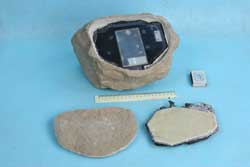
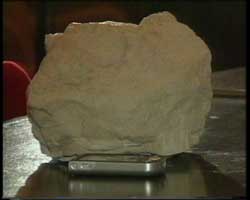
В телевизионной передаче также было отмечено, что контрразведчики обнаружили необычные технические средства, примененные британцами впервые в истории спецслужб. Осенью 2005 года К.Пирс привез в один из скверов на окраине Москвы камень со встроенным устройством, способным получать и передавать информацию. Оперативный сотрудник ФСБ России сообщил в телеэфире, что в определенное время в сквере появлялся российский гражданин, завербованный британской разведкой, который пересылал данные с переносного компьютера на аппаратуру, находящуюся в камне. Через некоторое время британский разведчик, проходя мимо камня, считывал информацию с помощью карманного компьютера. Российским контрразведчикам удалось задержать российского гражданина, который уже дал признательные показания.
 

During the program it was also noted that counter espionage agents discovered an unusual device used by the British for the first time. In the fall of 2005, Mr. Pirt placed a "rock", which housed electronic equipment capable of receiving and sending data, in one of the squares on the outskirts of Moscow. FSB operational personnel reported on the program that at pre-arranged times a Russian citizen recruited by British espionage, showed up on the square and transmitted data from a portable computer to the receiver in the "rock". A short while later his British controller would pass by the "rock" and upload the information onto a pocket PC. Russian counter-espionage agents were able to apprehend the Russian citizen, who has already provided incriminating information.  


Translation by JARII


SOURCE: WWW.FSB.RU


Чудо-камень изнутри

The insides of the wonder rock.


Осенью 2005 года К.Пирс привез в один из скверов на окраине Москвы камень со встроенным устройством, способным получать и передавать информацию

In the fall of 2005 Mr. Pirt placed the "rock", capable of receiving and transmitting data, in one of the squares on the outskirts of Moscow


По внешнему виду - обыкновенный булыжник

On the outside an ordinary cobblestone.


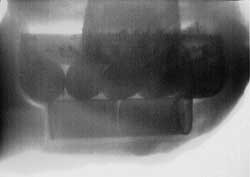
Но ренген говорит, что внутри сложная начинка

X-rays show a "complicated" filling


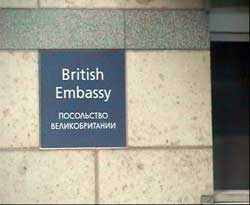
Посольство Великобритании и сотрудники посольства

British Embassy and Embassy Personnel
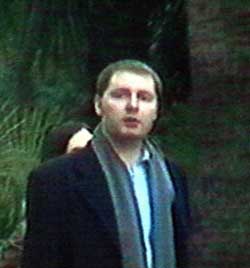

Марк Доу

Marc Doe


Кристофер Пирс

Christopher Pirt


Пол Кромптон

Paul Crompton


Флеминг, но не тот

Fleming, "not that one!"(sic)

"Sense of humour?"


eurasia foundation

Their Response


moscow helsinki group

More


01-09-06

They were murdered.

SEE: GUARDIAN 


A letter to the Guardian

Mohamed Al Fayed
Monday January 9, 2006
The Guardian

Dear Sir,
My attention has been drawn to an article by your columnist, Alexander Chancellor, that appeared in your edition of December 24 2005, under the heading: "You pays your money ...."

Rarely have I seen such a vile example of deliberate poisonous malice, thinly disguised as opinion. The Guardian has a fine reputation for scrupulously sticking to the facts. For never allowing the boundaries to blur between fact and comment.

Yet Alexander Chancellor deliberately disregarded the facts to write a hateful and venomous attack on my store and me. Chancellor is an odious creep who has become a disease on the face of the Guardian.

If he wished to make a fool of himself by demonstrating his lack of taste in describing Harrods, the world's most celebrated department store, as "tacky"and "depressing", then that was up to him. But when this journalist jackal poured scorn and derision upon the Book of Condolence, the real purpose of his disgraceful attack became all too clear.
The reason for the Book of Condolence is that, after Diana, Princess of Wales, and my beloved son, Dodi Fayed, were murdered, people who came to Harrods from all over the world asked me to create a place where they could go to remember those two wonderful young people and to record their tributes to them.

The book lies open at Harrods, every day. In it, visitors record their thoughts and prayers for the loving couple who died together, so tragically, eight years ago. So far, people of all races and creeds have filled 50 books with messages of love and kindness.

And that is exactly what Alexander Chancellor's attack on Harrods, and myself, was really all about. How dare this morally bankrupt swine sneer at the memory of a loving young couple whose lives were so cruelly snuffed out, and at ordinary decent people who feel so strongly about them?

The truth is that your columnist, Alexander Chancellor, is an establishment toady who is using his position on the Guardian for his own ends. He is a middle-class racist willing to sink to any depths to please his establishment masters. And he cannot bear the thought of the memory of the love of the Princess of Wales, and Dodi Fayed, being kept alive.

Before worming his way into the employ of your newspaper, which came as something of a surprise to most journalists, the poisonous Chancellor was the cringing lackey of Conrad Black, the disgraced owner of the Daily Telegraph.

As editor of the Guardian, I suspect that you will feel duty bound to defend your columnist and tell me that he is free to write whatever he wishes, so long as it is within the law. But I wonder if it has crossed your mind that there was yet another, darker reason why Chancellor abused the hospitality of your columns to attack me.

You will remember that I helped bring down the last Tory government. And that the Guardian was alone in supporting me. I regarded it then as my patriotic duty to help get rid of politicians that were rotten to the core. And I did so at no small risk to myself. But I never wavered. And neither did the Guardian. Can you imagine how angry Mr Chancellor, the Tories' champion, must have been? With both me and the Guardian?

Perhaps you should privately remind your double-dealing, sleazy, columnist that the Guardian is a newspaper, not a platform for his slimy establishment propaganda. And that if Chancellor wishes to deliberately grind his axe, by confusing fact with comment, he might be happier working for another, less scrupulous newspaper.

Though, having failed at so many jobs, it is difficult to imagine upon whom he might next inflict himself.

Yours faithfully,

M Al Fayed, chairman
 

Archive


Last Update: 12/29/2008 01:44:49